
This page contains affiliate links. If you choose to purchase after clicking a link, I may receive a commission at no extra cost to you.
“As an Amazon Associate, I earn from qualifying purchases.”
If someone asked you to name the first sign of aging, chances are you’d say wrinkles.
I used to think the same thing.
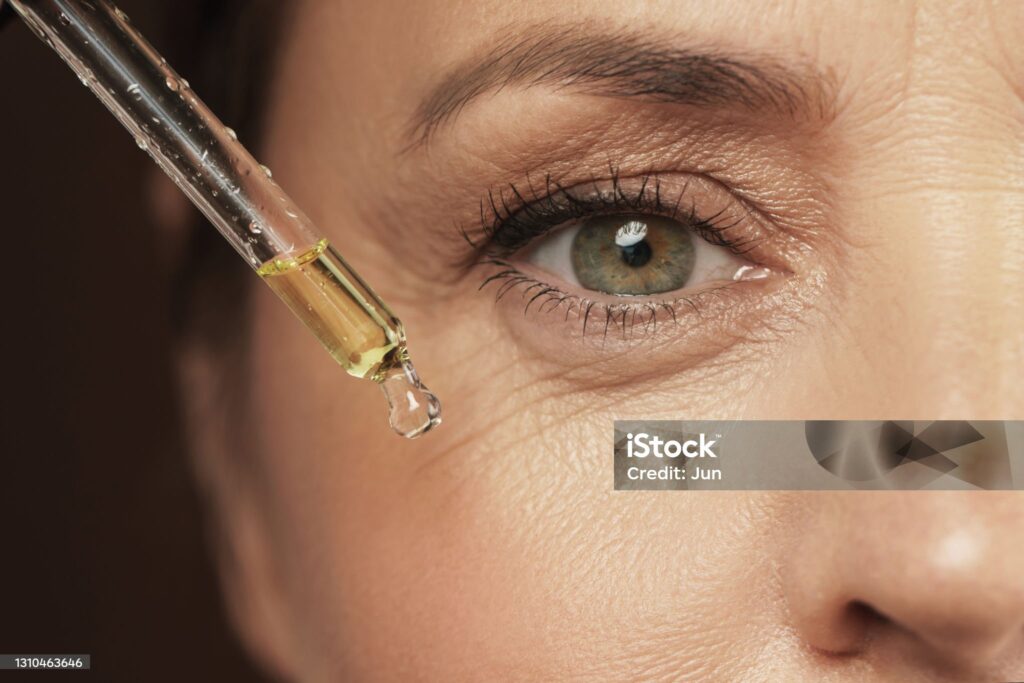
But recently, during a family gathering, two of my aunts—both in their late 40s and early 50s—started talking about their skin. Interestingly, neither one mentioned wrinkles.
Instead, they were concerned about stubborn brown spots on their cheeks, skin that suddenly felt dry all the time, and a complexion that seemed dull no matter what moisturizer they used.
As the conversation continued, I realized something surprising: their concerns were almost identical to those of many women I know over the age of 45.
And that’s when it hit me.
For most women, aging doesn’t start with wrinkles. It starts much earlier and much more subtly—with sunspots, dryness, uneven skin tone, and a gradual loss of radiance.
Let’s talk about what really happens as skin ages, when it starts, how menopause changes the game, and the simple routine that can help.
The First Signs of Aging Usually Aren’t Wrinkles
Wrinkles get all the attention because they’re easy to recognize.
However, some of the earliest visible signs of aging include:
- Sunspots (age spots)
- Uneven skin tone
- Persistent dryness
- Loss of glow
- Rough texture
- Enlarged pores
- Mild sagging
- Slower skin recovery
Many women begin noticing pigmentation changes long before they notice significant wrinkles.
Think about it.
Have you ever looked at an old photograph and thought your skin looked brighter, smoother, and more even-toned years ago?
That’s because one of the earliest signs of aging is often a gradual accumulation of sun damage.
Over time, years of UV exposure begin showing up as brown spots, discoloration, and dullness.
At What Age Does Skin Aging Begin?
Technically, skin aging begins in our 20s.
Don’t panic—that doesn’t mean you’ll suddenly look older overnight.
The changes are happening beneath the surface long before they become visible.
In Your 20s
- Collagen production begins to slow slightly.
- Skin cell turnover gradually becomes less efficient.
In Your 30s
- Early dryness may appear.
- Fine lines around the eyes can develop.
- Skin may not look as radiant as it once did.
In Your 40s
- Sunspots become more noticeable.
- Skin loses elasticity.
- Pigmentation issues become more common.
- Recovery from irritation takes longer.
In Your 50s and Beyond
- Dryness often increases significantly.
- Skin becomes thinner.
- Elasticity decreases further.
- Wrinkles become more pronounced.
Of course, genetics, sun exposure, smoking, stress, sleep, and lifestyle choices all influence how quickly these changes occur.
Why Sunspots Often Appear Before Wrinkles
One of the biggest misconceptions about aging is that wrinkles are the first thing you’ll notice.
In reality, sunspots often show up first.
Every day spent driving, gardening, walking outdoors, or running errands without adequate sun protection leaves a small mark on your skin.
The damage accumulates slowly over decades.
Then one day, seemingly out of nowhere, brown spots begin appearing on the cheeks, forehead, hands, and chest.
That’s exactly what my aunts were worried about.
Neither was asking how to remove wrinkles.
They wanted to know how to fade the brown spots that seemed to have appeared overnight.
The truth is those spots were developing quietly for years.
The Menopause Connection: Why Skin Changes So Suddenly
Many women notice dramatic skin changes around menopause.
This isn’t just perception—there’s a biological reason behind it.
During menopause, estrogen levels decline significantly.
Estrogen plays a major role in maintaining:
- Skin hydration
- Collagen production
- Elasticity
- Skin thickness
- Barrier function
As estrogen levels decrease, many women experience:
- Increased dryness
- Thinner skin
- Reduced firmness
- More visible fine lines
- Slower healing
This is why women often say:
“I’ve been using the same products for years, but suddenly they’re not working anymore.”
The skin’s needs change.
Products that once provided enough hydration may no longer be sufficient, making moisturizers and barrier-supporting ingredients even more important.
The Real Problem Isn’t Lack of Knowledge
Here’s something I’ve noticed over and over again. Most women already know what they should be doing.
They know sunscreen is important.
They know moisturizers help.
They’ve heard about retinol.
They’ve seen dermatologists recommend anti-aging ingredients.
The problem usually isn’t lack of information. It’s consistency. My aunts knew sunscreen helps prevent sunspots. They knew moisturizing was important. They even owned products that could help. Like many women balancing careers, family responsibilities, and busy schedules, skincare often became something they remembered only occasionally. And that’s incredibly common. A sunscreen used only on holidays won’t protect against years of daily sun exposure. A retinol used once a month won’t produce meaningful results. Skin aging happens slowly. Improvement happens slowly too. The women who achieve the best long-term results aren’t necessarily using the most expensive products. They’re simply consistent. In skincare, consistency beats perfection every single time.
A Simple Beginner Anti-Aging Routine
One of the biggest mistakes beginners make is buying too many products at once.
You don’t need a complicated 12-step routine.
A few effective products used consistently can make a significant difference over time.
Morning Routine
Step 1: Gentle Cleanser
Start with a cleanser that removes dirt and oil without stripping the skin. Check out these budget friendly clenasers/face wash.
Recommendation:
| Amazon.com | Amazon.de |
| Simple Kind to Skin Facial Wash | Simple Gentle to Skin Moisturising Face Wash |
| Avène Tolerance Daily Foaming Facial Cleanser | Avene Tolerance Locion Limp Gelifi |
Step 2: Vitamin C Serum
Vitamin C helps brighten the appearance of the skin and supports a more even-looking complexion. It can also help address the appearance of sunspots and environmental damage. Consider a moderate, well-tolerated concentration that provides effective results without causing irritation.
Recommendation:
Step 3: Peptide Serum
Peptides are one of the most underrated anti-aging ingredients.
These amino acid chains help support the skin’s natural collagen-building processes and are generally well tolerated by most skin types. Unlike stronger ingredients, peptides are beginner-friendly and can be used daily. Start with peptide serum and switch to Retinol gradually or use both.
Recommendation:
| Amazon.com | Amazon.de |
| Good Molecules Super Peptide Serum | Good Molecules Super Peptide Serum |
| Geek & Gorgeous – Power Peptides | Geek & Gorgeous Power Peptides Serum |
Step 4: Moisturizer
Look for moisturizers containing:
- Ceramides
- Hyaluronic acid
- Glycerin
- Squalane
These ingredients help combat dryness and support the skin barrier.
Recommendation:
| Amazon.com | Amazon.de |
| Aveeno Calm + Restore Redness Relief | Aveeno CALM+RESTORE Day Cream |
| CeraVe Intensive Moisturizing Cream | CeraVe Intensive Moisturising Cream |
Check out JIYU NAD+ Hydrating Face Moisturizer powered by NAD+, a coenzyme that supports natural skin renewal, helping reduce fine lines and restore a youthful, firmer look. Ceramide NP, Shea Butter, and Sunflower Seed Wax lock in moisture and protect against dryness for supple, resilient skin.
Step 5: Sunscreen (The Most Important Step/No excuse)
If you do only one anti-aging step, make it sunscreen. No anti-aging ingredient can outperform ongoing sun damage.
Daily sunscreen helps prevent:
- Sunspots
- Collagen breakdown
- Premature wrinkles
- Uneven pigmentation
Even on cloudy days.
Even during winter.
Even if you’re mostly indoors.
Check out this Unseen Sunscreen SPF 50 -Now non-acnegenic for acne-prone & sensitive skin -Enhanced SPF 50 & lighter than ever! -Doubles as a makeup gripping primer –No white cast on all skin tones. Glowscreen SPF 40 doubles as a makeup gripping primer -Provides a slight tint with a luminous, glowy finish.
Recommendation:
Evening Routine
Step 1: Gentle Cleanser
Remove sunscreen, makeup, and daily impurities.
Step 2: Retinol (Start Slowly)
Retinol remains one of the most researched anti-aging ingredients available.
It can help improve the appearance of:
- Fine lines
- Uneven texture
- Dullness
- Pigmentation
If you’re new to retinol:
- Start 1–2 nights per week.
- Use only a pea-sized amount.
- Follow with moisturizer.
Gradually increase usage as your skin adapts. Check out these beginners friendly Retinol serums.
Recommendation:
| Amazon.com | Amazon.de |
| La Roche-Posay Pure Retinol Face Serum | La Roche Posay Retinol B3 |
| Eclat Skincare Renewing Retinol Serum | Dr.Althea – 0.1% Gentle Retinol Serum |
Step 3: Peptides and Moisturizer
On nights when you’re not using retinol, apply a peptide serum followed by moisturizer.
This combination supports hydration and skin resilience while helping minimize irritation.
Lifestyle Habits Matter More Than Most People Think
Skincare products are only part of the equation.
Some of the most effective anti-aging strategies cost little or nothing:
- Wear sunscreen daily.
- Prioritize sleep.
- Stay hydrated.
- Eat adequate protein.
- Exercise regularly.
- Avoid smoking.
- Manage stress levels.
Healthy skin is built from both the outside and the inside.
Final Thoughts
One of the biggest myths about aging is that it begins with wrinkles.
For many women, it actually starts with subtle changes—sunspots that weren’t there before, skin that feels drier than usual, or a complexion that seems less radiant than it once was.
The good news is that you don’t need an elaborate skincare routine to support healthy aging.
A gentle cleanser, vitamin C, peptides, moisturizer, sunscreen, and a beginner-friendly retinol can go a long way when used consistently.
And that’s really the key word: consistency.
Not perfection.
Not expensive products.
Not chasing every new skincare trend.
Just showing up for your skin day after day.
Because the best anti-aging routine isn’t the most complicated one—it’s the one you’ll still be following a year from now.